

Next Ensemble Presents
Living Voices
May 29, 2026

Tonights Perfomers
JP Kentros
J.P. Kentros is in his second year as an Arts Specialist for Canyons School District where he leads, develops, and administers support for Arts programs district wide. Prior to his district assignment, Kentros spent 13 years as a high school choir teacher, and spent his last six as the Choir Director at Jordan High School in Sandy, UT. During his years directing high school choirs, he consistently directed groups to receiving superior ratings at Region and State Festivals, as well as directed groups who have placed at local and national competitions. Kentros has taken ensembles on performance tours to Seattle, Washington D.C., San Diego, Anaheim, Las Vegas, and more.
Kentros currently serves as a director for the Lehi Community Choirs, conducting a Lehi/Saratoga Springs/Eagle Mountain performance of Handel's Messiah each year in December, and a new works SATB choral performance towards the beginning of each calendar year. This ensemble proudly aims to maximize the talents of singers of all experience levels, and seeks to connect people from all backgrounds and beliefs.
He received his Master of Music Education degree at SUU in the Spring of 2018. Kentros also holds a Bachelor's degree from Southern Utah University (double major in Music Education and Theatre Education), and upon graduation was named the Outstanding Graduate of SUU's Music Department in 2009.
Always refining his craft, Kentros remains an active member of the American Choral Directors Association, the National Association for Music Education, and currently serves as the chair of the Utah Music Educators Association Choral Committee as the Choral VP. As well as directing choirs, Kentros has frequently served as music director and private voice teacher to students from elementary to high school ages, and has even had the privilege of being hired as guest-music-director for both Southern Utah University and Dixie State University mainstage theater department productions.
Kentros looks forward every day to the challenges that directing choirs and coaching voices bring, and always enjoys watching students grow from doing new and challenging literature. He is excited to train young singers for the foreseeable future.
Experienced in audio hardware and recording software, Kentros has done several presentations on streaming live performances at PD conferences across the state. He has been hired and consulted on the set up of many school livestream set ups throughout the state of Utah.
Kentros remains most proud to be a husband to Anni, and a dad to Danny and Audrey.

Rebecca Schull
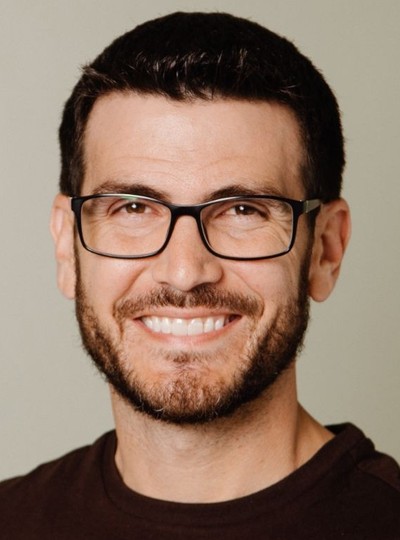
Born singing and raised performing, Rebecca Schull is an established musician with evolving artistic sensibilities, branching out from performance into pedagogy, dramaturgy, direction, and composition throughout her education. She holds a Bachelor of Music degree in Vocal Performance from Weber State University, and is now pursuing a Master of Vocal Performance and Pedagogy through Utah State University. Future projects include the upcoming UFOMT 2026 season, followed by her international opera debut this summer as Grimgerde in Richard Wagner’s Die Walküre. Aside from the personal joy and authentic connection she finds through music, a life of creation has cemented Rebecca’s firm conviction in the utmost importance of humanities education in the formation of vibrant hearts, minds, and lives. Get to know Rebecca through her works, and learn more at rebeccaschull.com.


Clifford King
CLIFFORD W. KING is an award-winning Salt Lake City-based composer. Recent commissions include Cantorum Chamber Choir, Wasatch Chorale, Salt Lake Chinese Choir and the Gay Men’s Chorus of Washington D.C. Clifford is the composer for the popular podcast and YouTube series “Profiling Evil” and his work has been performed worldwide, including premieres by Opera Contempo, Salt Lake Choral Artists, and NEXT Ensemble. In 2022 he founded the Rocky Mountain Chamber Choir - Virtual Singers, a collective of professional choral artists dedicated to recording new works by living composers, for which he also serves as their artistic director. Clifford’s music is published by Hinshaw Music and Carus-Verlag. He loves slightly out-of-tune pianos, bighorn sheep, and rooibos tea.


Jessica Rudman
Jessica Rudman’s “starkly effective” (Opera News) music inspires empathy for social issues through stories of myth, magic, and the modern world. Described as a “new music ninja” by the Hartford Advocate, she blends lyrical melodies and dramatic narrative structures with sensual harmony and vibrant color to draw the audience into the world she has created. Her works for the concert hall, dance, and opera often differ in musical language and approach, with the common thread always being expressivity. She believes that the ability to reach one’s audience is of extreme importance in our current social, economic, and political environment.
Jessica’s works have been performed by groups such as the International Contemporary Ensemble, the Cadillac Moon Ensemble, The Omaha Symphony’s Chamber Orchestra, the Yakima Symphony Orchestra, and the Hartford Independent Chamber Orchestra. She has received awards from SCI/ASCAP, Boston Metro Opera, the College Music Society, the International Alliance for Women in Music, and others.
Jessica serves as an Assistant Professor of Composition and Theory at the University of Utah. Learn more about her here.


Randall Smith
Composer/Performer Randall Smith lives in pursuit of a creative practice that challenges categories and
defies assumptions and expectations about genre, style traditions, and the foundations of music itself.
Viewing music as a uniting and edifying force, Smith's interests chiefly lie in unusual and unexpected
collaborations with musicians and artists of various disciplines and media as well as community experiences
that challenge traditional concert formats and participant roles.
Never one to shy away from the bizarre, Smith makes up one half of punk-classical duo Counterpoint
Hangman, an ensemble that evades description at every turn, combining stylistically fluid spontaneity with
edgy, experimental theatrics.
Hobbies and extra-musical pursuits include cooking, reading everything in sight, learning languages, and
Chinese martial arts.


Ceilidh Argyle
Ceilidh is thrilled to be performing with NEXT Ensemble for the first time. Her favorite recent roles include performing with the Draper Philharmonic as a soloist, Carmen in Bizet's opera "Carmen", Gertrude in Humperdinck's opera "Hansel und Gretel", and Lily in "The Secret Garden." Ceilidh currently teaches theater at Collective Academy and has a Bachelor's of Music in Vocal Performance from Weber State University. She also holds a Bachelor's of Science in Psychology, also from Weber State.


Keely Malcom
Keely Malcom is a classically trained lyric soprano based in Ogden, Utah and holds a Bachelor of Music in vocal performance from Weber State University. She has extensive background in teaching and performing classical, musical theatre, and commercial styles in both ensemble and solo settings. Keely has been a featured soloist in Chamber Orchestra Ogden and in WSU’s symphony orchestra as a winner of the Concerto Night competition. She currently serves as a vocal coach at Amplify Choirs and as an adjunct voice faculty member at Weber State University.

Mandi Barrus
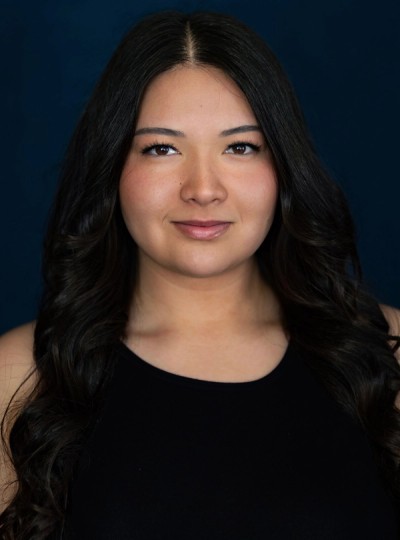
Lyric mezzo-soprano Mandi Barrus is a musician and opera producer. With her "impressive technique and clear tone", her “warm and cozy mezzo-soprano voice” has been hailed as "a breath of fresh air" (Front Row Reviewers, San Luis Obispo Reviews).
Mandi holds a Master of Music degree from the University of Utah and sings at St. Paul's Episcopal Church in Salt Lake City as the Mezzo-soprano Artist-in-Residence. She lives with her three children and partner, composer David Campbell, in South Jordan, UT.


Nathan Knowles
Nathan is a Weber State Choral Alumni and is honored to be singing with NEXT ensemble for the first time. Nathan has been surrounded by music his entire life: playing piano and saxophone, performing in musicals, and singing in choirs. Outside of performing, Nathan is a passionate artist, focusing his talents on the visual arts, such as illustration, concept art, and character design.


Caleb Saunders
Caleb Saunders is thrilled to be back with the Next Ensemble! He previously served as Collaborative Pianist and Music Director for the 2022 productions of The Telephone and The Combat in collaboration with Opera Contempo. Caleb is the Choir Director at Weber High School, where he directs five choral ensembles, teaches AP Music Theory, and music directs the fall musical. Caleb holds a Master’s degree in Conducting from the University of Oregon and a Bachelor’s degree in Music Education from Weber State University, both with emphases in Piano Performance and Collaborative Piano. Under his direction, the Weber High Chamber Choir was featured at the 2026 UMEA Conference flagship choir concert in St. George. Caleb also recently conducted the Northern Utah Youth Symphony for their Spring Concert and America 250 concert at Promontory Point, and will conduct the Northern Utah Youth Chamber Orchestra and the Northern Utah Youth Choir in the Fall. As a vocalist, Caleb has recently performed with the Salt Lake Vocal Artists on their Taiwan International Choral Festival tour, where he also served as Assistant Conductor, as well as with the American Festival Chorus, the Sagebrush Singers, and the Oregon Bach Festival. Caleb is a published composer of choral and piano music and recently released a book of hymn arrangements for solo piano. Music and publications can be found at shop.calebsaundersmusic.com. In his free time, Caleb enjoys spending time outdoors with his wife and two young boys.


Jaron Henderson
"Music has been a part of life since literally before I can remember. My parents often tell stories of my grandmother, a lifelong musician, singing to me as a child, and how she'd change keys just to see if I could follow along. I started doing choir extracurricularly in the 5th grade, singing at my city's Christmas festivals and other school events. I've been in choirs as much as I possibly could ever since, auditioning into the Illinois Music Educators Association's yearly middle school choir event in 8th grade and eventually into my high school's top choir. I've continued following this passion throughout my secondary education as well, singing in both the Chamber and Student Ensembles at Waubonsee Community College, and eventually the Utah State University Chamber Singers. I'm very excited to be able to provide my voice for Next Ensemble, and look forward to the concert!"


Dylan Thomas
Dylan has over a decade of experience singing in a variety of Utah choirs. He graduated from Weber State University with a bachelor’s degree in Vocal Performance, where he sang in the university’s concert and chamber choirs for 4 years and performed in several of their opera productions. Dylan also sang with the Utah Opera Chorus in their 2019 production of “Silent Night” and has performed with several local theaters; he is thrilled to be a part of this performance!


Holly Banfield
Holly Banfield graduated with a DMA in vocal performance at the University of Utah where she performed as Mrs. Lovett in Sweeney Todd, Dorabella in Cosi fan Tutte, Juno in Semele, Madalena in Rigoletto, and the Mother in Amahl and the Night Visitors. Some of Holly especially enjoys comedic roles such as Tisbe in Cenerentola, Orlofsky in Die Fladermaus, the Komponist in Ariadne auf Naxos, and the Third Lady in the Magic Flute. She also serves on the board for Opera Contempo.
Holly won 1st Prize in the 2021 Martha Marcks Mack Federation Competition. She was awarded Bronze in the National Russian Competition in December 2020. The University of Utah was awarded the National Opera Association’s 1st place for their productions in which she participated as Assistant Director and performed as the Mother for Amahl and the Night Visitors.
Holly is not only a performer but a passionate educator. Holly served as the Teaching Assistant for Opera Workshop and the president of the Student Opera Guild at the University of Utah from 2019-2022. Prior to her studies at the University of Utah, Holly was a choir teacher for 9 years and has had a private voice studio for over 13 years. Throughout her higher educational training, Holly has served as Assistant Teacher for Music Theory, Ear Training, Women’s Choir, University Choir, Private Voice lessons, and Opera Workshop.
Holly has studied voice with Celina Schaffer, Robert Breault, Kris Ceisinski, Darrell Babidge, Edna Garabedian, and Jacqueline Kreitzer. She has performed with Maestros Ryan Murray, Joseph Rescigno Nicolas Giusti, Brian
Alhadeff, Jeffrey Price, and Greg Ritchey. She has worked under the stage direction of Roy Stevens, Robert Breault, Edna Garabedian, Anthony Laciura, and David Ronis.


About Tonight's Pieces
Laudate!
"Laudate!" is a celebratory work of excitement and praise. After its boisterous opening, the energy of the song takes off with differing motifs and rhythmic figures in each voice before the chorus unites in large, harmonic textures. The anticipation builds again before returning to the polyphonic section from before. The work slightly slows down, while maintaining its energetic spirit, creating polychordal harmonies. The uptempo energy comes back once more and builds through the key change and rollicking finale (similar to the beginning).
Evocation
Unable to Forget
Unable to forget, you recall your love;
Yet let life pass away, though in pain.
One day you may be able to forget.
Unable to forget, you recall your love;
Yet just bid the years to slip away.
Unable to forget, you may still forget a little
Sowol Kim (1902-1934)
Survivor’s Blessing
The Survivors’ Blessing was inspired by lines from Kendra Preston Leonard’s novella in verse Protectress, which we recently adapted into an opera. The genesis for this piece comes from one of many gorgeous excerpts that was not included in the opera. In the text, the goddess Hecate offers blessings to Medusa after she was raped by Poseidon and cursed by Athena, including blessings for healing herself, for protection, and for bringing light. Kendra expanded those few lines into a longer poem entitled “Hecate’s Tears,” which held a more universal blessing for all survivors of violence.
The Tempest
“Upon my first reading of Shakespeare’s The Tempest, I was profoundly affected by the line, “...when I waked, I cried to dream again.” It is a tragic fate to be trapped in a desolate life and have no power to escape that life but to take refuge in dreams. I began to associate this powerful mental image with other forms of escapism and the ruin they can cause - addiction, relationship decay, financial ruin - and how those problems compound on themselves. From that desperate position, the temptation to go back to sleep makes a lot of sense. It is my sincere hope that we create lives for ourselves and those we love that we will not fear to face when we wake after long sleep. May your dreams be a rest, but not your only refuge.
Come See Real Flowers
Haiku has long been among my favorite poetic traditions. The more I
learn of its subtleties, the more mysterious and enchanting it
becomes. Somehow, the practice of distilling an idea into so few
syllables with such deliberate balance suggests to me a pattern for
simple, intentional living (an idea I fail constantly to employ).
Matsuo Basho is broadly regarded as the father of haiku, and its
unequivocal master. In a time of barbaric cruelty, insurmountable
corruption, and a cavalier willingness to barter the living world for
profit, Basho’s invitation in this text feels poignantly timely.
I hope all who hear this setting take the master’s invitation to
heart and find a renewed sense of kinship, connection, and
responsibility with and to all living things.
Winter Goddess, Give Me Your Hands
Winter Goddess, Give Me Your Hands was created from a deeply personal concern: the disappearance of winter. Having lived in Utah most of my life, I have watched our winters get shorter, summers get hotter, and water become an increasingly scarce and fragile resource. That awareness brings to me a sense of responsibility and more importantly an acknowledgment that the climate crisis is urgent and immediate. Recent developments close to home have intensified my urgency behind this piece. The proposed construction of a massive data center in Box Elder County, with a larger proposed footprint than Bryce Canyon National Park, will directly impact our air quality, water, and landscape in this place we call our home.
By truly remarkable happenstance, I connected with the brilliant poet Kendra Preston Leonard, and through her this concern took on a mythic dimension. Drawing from Slavic and Celtic traditions, she created a text that mourns a fading winter goddess. Kendra's poetry beautifully holds tension between regret, hope, grief and resolve. It does not simply wish for restoration, but instead offers this collective vow: “we commit to repair this world that is our home.” The recurring line, “Winter Goddess, give me your hands,” becomes both a plea for guidance and an act of accountability.
In the piece, the piano utilizes a technique developed by Ukrainian composer Lubomyr Melnyk called "continuous music". The piano sustains a constant, flowing texture of rapidly repeated notes, creating a shimmering, resonant soundscape where harmonies emerge gradually rather than through distinct gestures. This uninterrupted motion creates a sense of suspension and timelessness, hopefully giving the listener and singers alike time to dwell within the text and its message.
As the piece unfolds, the structured texture changes to something more communal and spontaneous. During the central chant, individual singers move at their own pace, creating a layered, incantatory effect. In performance, the audience is invited to join this chant and help to transform it from a passive listening experience into a shared act of reflection and intention.
Winter Goddess, Give Me Your Hands is a meditation and a lament. It is a call to action for us to consider our role in the fragile systems that sustain us, and to imagine what it means to repair them.
Where the Light Begins
This beautiful poem was originally written as a blessing for Christmas by writer and artist Jan Richardson. On her blog (adventdoor.com), she writes, “though we cannot see or feel or know all the ways that God is radiantly illuminating us, may we open ourselves toward that light. May we open our eyes, our hands, our hearts to meet it. May we lean into the light that begins in the deepest dark, bearing itself into this world for us.” In writing this piece in its original SSA voicing for the Henry Middle School Varsity Treble Choir, their director asked me to contemplate the theme of “peace” for their concert program. This text, while originally written about Advent and the anticipation of Christmas, uses wonderfully universal words that relate to ideas of peace and hope. Jan’s blessing makes me think that within each of us is the ability to work toward peace. It doesn’t take a monumental action, just many little kindnesses that we can show to others every day which radiate out to bring light to the whole of humanity. When we love, accept, and care for all of our neighbors—despite our differences—we find that the light that the dark world so desperately needs begins in us. Many thanks to the Austin Gay Men’s Chorus (Dr. Thomas Rinn, conductor) for their commissioning of this TBB voicing.
Like a Prayer
Featured in the Marvel film “Deadpool & Wolverine” this adaptation of an 80s pop ballad has surged in popularity becoming a viral trend on major social media platforms in 2025. Mark Brymer's arrangement beautifully captures the soulful choral writing found in this new version.
God Be With You ‘Til We Meet Again
I’ve had this melody and text rattling around in my head for many years, and finally had the opportunity to flesh it out. The text is an adaptation of the traditional Irish blessing with additional original text, combined with the refrain, “God be with you ‘til we meet again.” The melodies and harmonies are very accessible—suitable for church and community choirs, as well as more experienced high school and college choirs. The piano accompaniment provides good support and contains counter melody lines—and an optional ambient electric guitar part really adds an evocative element. Ideal for a benediction/blessing or closing piece—or a graduation send-off concert. (An a cappella voicing for this piece will be coming soon.)