
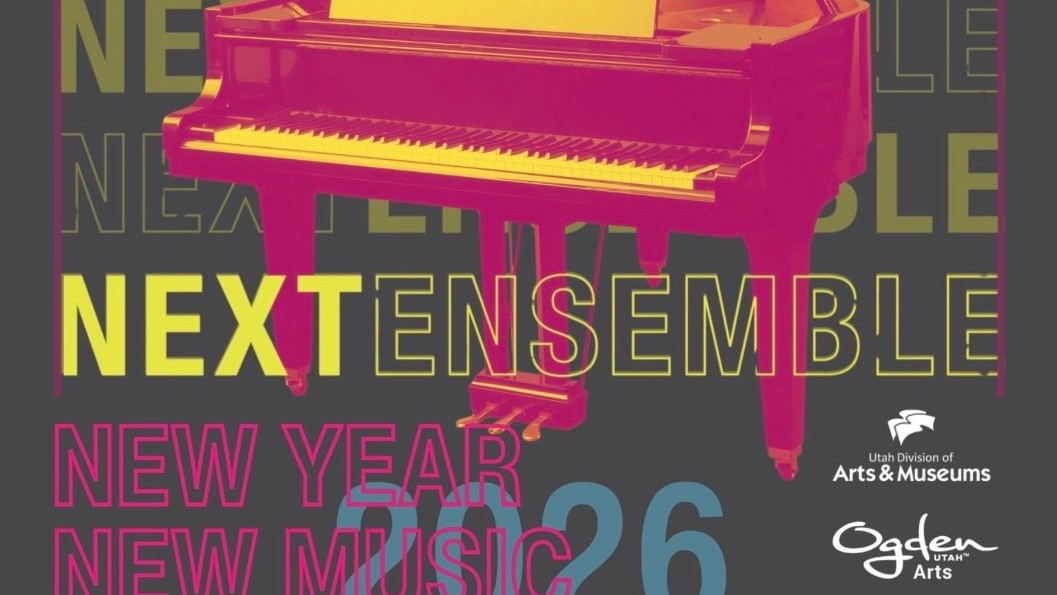
Next Ensemble Presents
New Year New Music
January 23, 2025

Tonight's Artists
Esther Jeehae Ahn
Lauded by the Boston Musical Intelligencer for her interpretive coherence and graceful realization, pianist Esther Jeehae Ahn has captivated international audiences with her rare blend of musical brilliance, sensitivity, and emotional depth. As a soloist and chamber musician, she has performed in major venues, series and festivals throughout North America, Asia, and Europe, among them Alice Tully Hall at Lincoln Center, Boston Symphony Hall, Flynn Performing Arts Center, Abravanel Hall, Jordan Hall, Calderwood Hall at Isabella Stewart Gardner Museum, Seoul Arts Center, Mozart Hall, Moscow Conservatory, University of Music and Theatre Leipzig, Rockport Chamber Music Festival, Busan Music Festival, Summer Institute of Contemporary Performance Practice, International Liszt Symposium, Korean-American Cultural Foundation, and MusicFest Canada.
Esther earned her Bachelor and Master of Music degrees in Piano Performance from New England Conservatory and Doctor of Musical Arts degree in Piano Performance and Literature from Eastman School of Music, with a minor degree in Accompanying andChamber Music. Her teachers have included the late Russell Sherman, Wha Kyung Byun, Meng-Chieh Liu, Rebecca Penneys, Douglas Humpherys, Paul Biss, Gabriel Chodos, Donald and Vivian Weilerstein, and Jean Barr. She won numerous prizes and awards, including first prizes in Junior Chopin Competition, Harvard Musical Association Competition, Boston Symphony Orchestra Concerto Competition, Busan Music Festival Competition, Ye-Eum Piano Festival, Jack Kent Cooke Young Artist Award from theJack Kent Cooke Foundation, Frances B. Lanier Award from New England Conservatory’s Preparatory School, and Arnold C. TaylorAward from Walnut Hill School for the Arts where she graduated summa cum laude and was inducted to the National Society of High School Scholars. She was a guest artist at the South Korean launch of Steinway & Sons, the Ministry of National Defense in South Korea, and at the US-Korea Conference in New York City. Her performances have been broadcast on National Public Radio’s From the Top and WSMR Classical.Lauded by the Boston Musical Intelligencer for her interpretive coherence and graceful realization, pianist Esther Jeehae Ahn has captivated international audiences with her rare blend of musical brilliance, sensitivity, and emotional depth. As a soloist and chamber musician, she has performed in major venues, series and festivals throughout North America, Asia, and Europe, among them Alice Tully Hall at Lincoln Center, Boston Symphony Hall, Flynn Performing Arts Center, Abravanel Hall, Jordan Hall, Calderwood Hall at Isabella Stewart Gardner Museum, Seoul Arts Center, Mozart Hall, Moscow Conservatory, University of Music and Theatre Leipzig, Rockport Chamber Music Festival, Busan Music Festival, Summer Institute of Contemporary Performance Practice, International Liszt Symposium, Korean-American Cultural Foundation, and MusicFest Canada.
Esther earned her Bachelor and Master of Music degrees in Piano Performance from New England Conservatory and Doctor of Musical Arts degree in Piano Performance and Literature from Eastman School of Music, with a minor degree in Accompanying andChamber Music. Her teachers have included the late Russell Sherman, Wha Kyung Byun, Meng-Chieh Liu, Rebecca Penneys, Douglas Humpherys, Paul Biss, Gabriel Chodos, Donald and Vivian Weilerstein, and Jean Barr. She won numerous prizes and awards, including first prizes in Junior Chopin Competition, Harvard Musical Association Competition, Boston Symphony Orchestra Concerto Competition, Busan Music Festival Competition, Ye-Eum Piano Festival, Jack Kent Cooke Young Artist Award from theJack Kent Cooke Foundation, Frances B. Lanier Award from New England Conservatory’s Preparatory School, and Arnold C. TaylorAward from Walnut Hill School for the Arts where she graduated summa cum laude and was inducted to the National Society of High School Scholars. She was a guest artist at the South Korean launch of Steinway & Sons, the Ministry of National Defense in South Korea, and at the US-Korea Conference in New York City. Her performances have been broadcast on National Public Radio’s From the Top and WSMR Classical.
Equally at home with the traditional canon and music of our own time, Esther’s advocacy of new music has led to working closely with such distinguished composers as Peter Maxwell Davies and Unsuk Chin, as well as performances of works by leading contemporary voices including Jessie Montgomery, Caroline Shaw, Jennifer Higdon, Steve Reich, and John Harbison. She gave the world premiere of Amy Dunker’s solo works written for the courageous people of Ukraine. In recent seasons, Esther has been invited to appear as a guest artist with the American Liszt Society, NOVA Chamber Music Series, Bonneville Chamber Music Festival, Korean-American Federation of Utah, Ogden Piano Festival Cultural Extravaganza, Browning Trio, and at two special gala celebrations for Walnut Hill School for the Arts. Additionally, she can be heard as a collaborative pianist on the recording of Thom Priest’s original composition for Bassoon and Piano, “Running the Green."
The 2024–2025 season featured an array of performances across the United States and abroad, including a solo recital as the Conference Artist for the Utah Music Teachers Association State Conference, a lecture-recital at the Cleveland Institute of Music, concerts of contemporary and chamber repertoire, a return to the Charlotte Bach Festival, and teaching and performing engagements throughout South Korea—including a solo recital at Steinway Hall in Seoul. The 2025–2026 season includes a residency at the University of North Carolina School of the Arts, a concert of newly commissioned solo piano works with NEXT Ensemble, and appearances as soloist and chamber musician in a range of performances with flutist Emi Ferguson, violinists Aisslinn Nosky and Blanka Bednarz, and cellists Guy Fishman and Cheung Chau. Esther also gives a featured performance with members of the Utah Symphony.
As an artist-teacher, her passion lies in nurturing individual expression, human compassion, and unique talents from all walks of life. Esther currently serves as Assistant Professor of Piano at Weber State University, where she is also the Director of WSUPiano Festival and Accompanying area. In the summers, she is on the Artist Faculty of Bay PianoFest at the San Francisco Conservatory of Music. Additionally, she held the role of Program Assistant at the Rebecca Penneys Piano Festival at the University of South Florida for two seasons and was a faculty-mentor at Bravo Waukegan and American Music Centre. A sought-after adjudicator and clinician, she has been invited to judge numerous competitions and give masterclasses across the country. Esther is also Chair of the Music Teachers National Association Piano Performance Competition for the State of Utah and has served as the Chair of the Collegiate Program for the Utah Music Teachers Association. She previously taught at New England Conservatory and Eastman School of Music and served on the piano faculty at Clarke University.

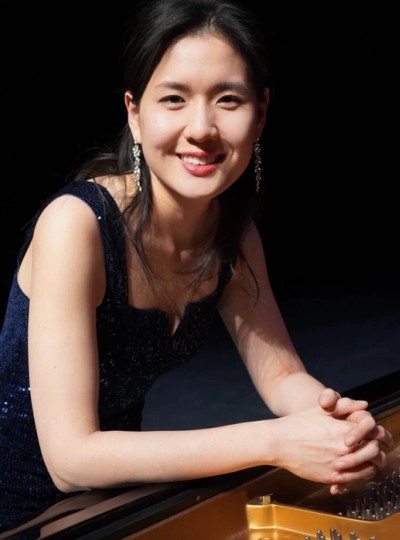
Thomas Abrahamson
Thomas Abrahamson is a pianist and composer native to the Pacific Northwest, residing just outside Seattle. He began playing the piano in his mid twenties as a self taught musician having no prior exposure to music education or training. He recently began composing for solo piano, and piano ensemble in 2022 and performs his own works publicly in Washington.

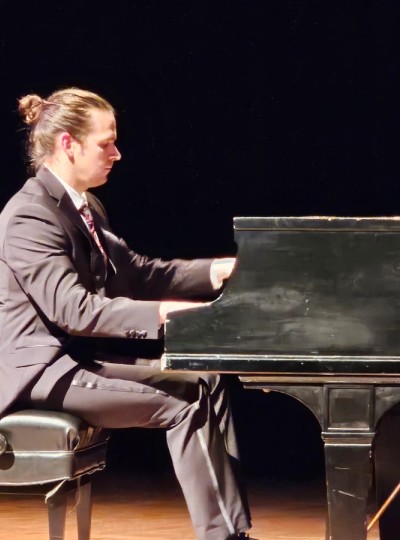
Daivd Campbell
David Campbell is a composer whose work draws connections between musical forms, harmonic systems, artistic concepts from other disciplines, and human experiences, with particular attention to the mind and mental health. Central to his approach is the recognition that music communicates to human listeners, and each work is conceived as a transmission of meaning that balances formal experimentation with accessible emotional and intellectual engagement.
David's compositional aesthetic has been informed by formal studies at Southern Utah University, Western Washington University, and Stony Brook University, where he studied with composers Hal Campbell, Keith Bradshaw, Leslie Sommer, Roger Briggs, Sheila Silver, and Perry Goldstein. His work demonstrates a sustained engagement with both the established canon and diverse voices within the contemporary classical tradition.
As Artistic Director of NEXT Ensemble, an Ogden-based new music nonprofit organization, David curates and champions the performance of innovative contemporary repertoire. He is a founding member and board member of Opera Contempo, an organization dedicated to the advancement of new operatic works and interpretations.
David's current projects include Love Droids, a chamber opera with librettist Anthony Buck, scheduled for production by Opera Contempo in 2027, and Nova, a full-length opera in collaboration with librettist Jennifer Campbell, slated for premiere in 2028-2029. He continues to develop new chamber works for NEXT Ensemble's concert season.

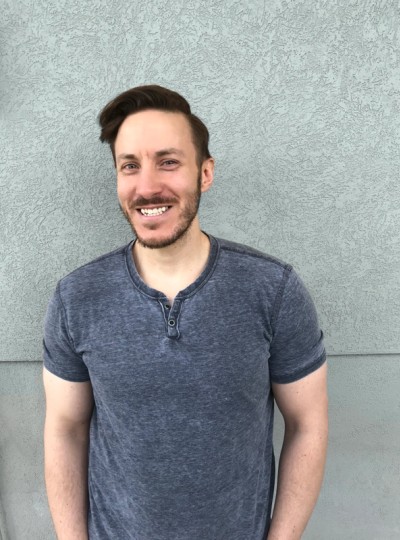
Brian Casper
Brian Casper is a Salt Lake City based composer educated at Vanderbilt University and
Berklee College of Music where he studied under composer John Bavicchi (1922-2012). Mr.
Casper’s primary focus is the expression of humanity and the human experience through
music.

Igor Iachimciuc
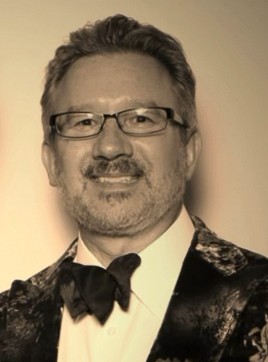
Igor Iachimciuc is a composer, cimbalom performer and professor. His compositions comprise a variety of styles and are written for chamber, orchestral, choral, and electronics mediums. A native from the Republic of Moldova, Mr. Iachimciuc studied composition with prominent Moldavian composer Vasile Zagorschi. Later, Mr. Iachimciuc received a PhD in composition from the University of Utah. His main professors included Morris Rosenzweig, Miguel Chuaqui, and Steve Roens. Mr. Iachimciuc writes music that is often inspired by poetry, visual arts, math, and folklore from different parts of the world. His music draws on an eclectic mix of sounds and usually features some combination of bright colors, propulsive energy, a healthy dose of lyricism, and the fragmentation of musical ideas.
Mr. Iachimciuc's awards include 1st prize in composition at the Silver Chrysanthemum National Competition in Moldova, as well as the 2003 Wayne Peterson's Prize in US. Igor Iachimciuc's works have been purchased by the National RTV Company and performed by various Moldavian ensembles, as well as by San Francisco's Earplay New Music Ensemble, Flexible Music, Canyonlands, New York New Music Ensemble and NOVA Chamber music series. Mr. Iachimciuc's commissions include Utah Arts Festival, Intermezzo Chamber Music Series, Concertino, Duehlmeier-Gritton Duo, Ars Poetica, Chicago Bass Ensemble, and Forward Four clarinet quartet.

Brady Wolf
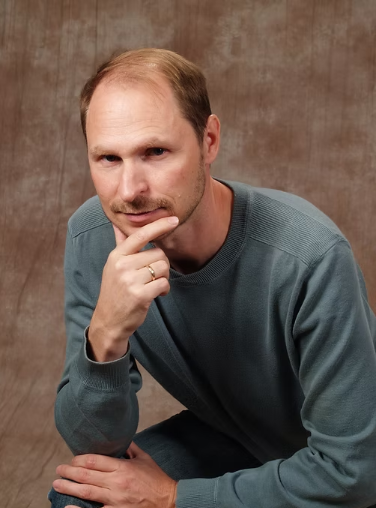
Brady Wolff is a Kansas City-native composer whose work blends intense rhythmic activity and mathematical processes to create works dealing with themes of climate change, queer identity, and neurodiversity. Inspired by his experiences with Tourette syndrome, his music explores discomfort, tension, and control. Brady’s compositions have been performed by artists like Lindsay Kesselman, the Toledo Symphony Orchestra, and the Boston New Music Initiative. Wolff’s works have also been featured at events such as the Estivales de Lods and the International Double Reed Society Conference. He has received honors from ASCAP, The Presser Foundation, the Boston New Music Initiative, and others. As an educator, Brady fosters inclusivity and self-expression, guiding students to discover their unique artistic voices. He holds a B.M. from the University of Missouri-Kansas City and is pursuing an M.M. at the Indiana University Jacobs School of Music. When he is not composing, Brady enjoys scuba diving, and tending to his collection of houseplants.

Mathew Lam
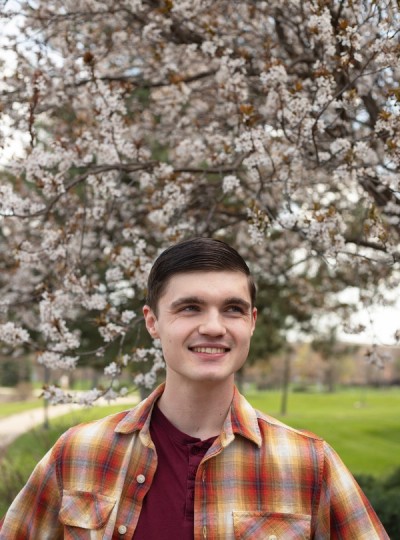
Born and raised in Hong Kong, Matthew Lam is an active composer of acoustic and electroacoustic music and an enthusiast of contemporary music style. His music explores and experiments on a wide array of sounds and timbre with contemporary instrumental techniques and electronics, and integrates electroacoustic elements into acoustic music. His recent interests include saturation in music and ambisonics.
Winning multiple awards, his works were featured in numerous festivals and events across 4 continents, including June in Buffalo (USA), American Composers Orchestra Earshot (USA), International Computer Music Conference (2025: Boston), International Rostrum of Composers (2023: Netherlands), International Review of Composers in Belgrade (Serbia), Paysages | Composés (France), Espacios Sonoros (Argentina), Midwest Graduate Music Consortium (USA), Ignite the Arts Festival (Canada), MUSLAB (Ecuador), Nanhua University International Symposium of Contemporary Music Research (Taiwan), soundSCAPE Festival (Italy), Connecticut Summerfest (USA), SCI National Conference (USA), and Hong Kong Contemporary Music Festival (HK), among others.
Groups such as the Hong Kong Philharmonic Orchestra, Toledo Symphony, Kalamazoo Symphony Orchestra, Hong Kong Chinese Orchestra, Eastman Philharmonia, Eastman Musica Nova, Mivos Quartet, Del Sol Quartet, [Switch~ Ensemble], Mise-en Ensemble, Du.0, Cong Quartet, NEXUS Ensemble, and Toolbox Percussion are among the many who have presented Lam’s music over the years.
Lam earned his Bachelor of Arts in Music with highest honours from the Chinese University of Hong Kong, and completed his master’s studies at Bowling Green State University, where he held a theory assistantship. He is currently pursuing is doctoral studies at Eastman School of Music, and serves as a teaching assistant at Electroacoustic Music Studios at Eastman (EMuSE), supported by the Composers and Authors Society of Hong Kong Music Scholarship for Overseas Studies. His formative composition mentors include Mikel Kuehn, Evis Sammoutis, Elizabeth Ogonek, Christopher Dietz, Marilyn Shrude, Wendy Lee, and Kai-Young Chan.

Clifford King
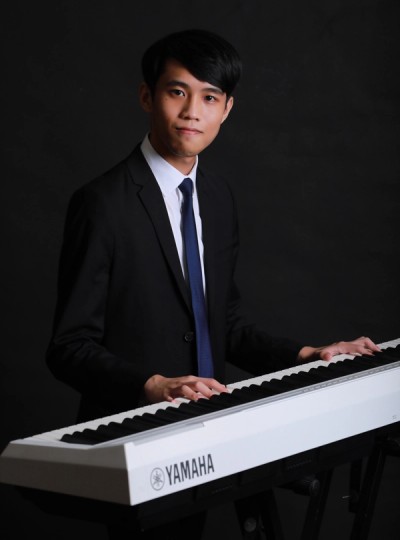
Clifford W. King is an award-winning Salt Lake City-based composer. Recent commissions include Cantorum Chamber Choir, Wasatch Chorale, and the Gay Men's Chorus of Washington D.C. Clifford is the composer for the popular podcast and YouTube series "Profiling Evil" and his work has been performed worldwide, including premieres by Opera Contempo and Salt Lake Choral Artists. In 2022, he founded the Rocky Mountain Chamber Choir - Virtual Singers, a collective of professional choral artists dedicated to recording new works by living composers, for which he is also the artistic director. Clifford’s music is published by Hinshaw Music and Carus-Verlag. He loves slightly out-of-tune pianos, bighorn sheep, and rooibos tea.


About Tonight's Pieces
Scherzo (Black Red)
Black and Red are boldly separated but bleed together in this Scherzo. The structure is classically rooted but the harmonics and textures are anything but.
Copernicus Etudes - Neptune, Mars, Pluto
"Neptune," the second movement of Copernicus Etudes, takes its subtitle from the massive storm system discovered by Voyager 2 in 1989. This atmospheric maelstrom provides both the movement's dramatic narrative and its structural architecture.
The piece plunges immediately into the storm with constantly shifting meters that create a visceral sense of being buffeted by Neptune's violent winds. The opening four-note cell undergoes continuous transformation through techniques that extend directly from Brahms's principle of "developing variation." Each iteration simultaneously preserves the cell's essential character while revealing new possibilities. Like Beethoven's famous "fate" motive, this minimal material generates the entire movement's substance, though here filtered through contemporary harmonic language.
The movement's dramatic center arrives with the marking "Expansively"—the eye of the storm. Extended pedal points and floating harmonies create an atmosphere of ominous tranquility, evoking the unnerving experience of standing within the storm's center, surrounded by towering cloud walls. This section functions like the slow movement of a compressed sonata, with its sustained dissonances creating beauty tinged with menace.
The storm's return brings even greater violence, as complex meters create rhythmic vertigo while the piano's full range is deployed in a final passionate outburst. This three-part journey (storm, eye, storm) creates an ABA' structure that would be immediately recognizable to Brahms, though the harmonic language extends his chromatic explorations into contemporary territory. The dramatic arc, with its careful proportions and climactic pacing, follows classical principles of tension and release, demonstrating how traditional formal thinking can accommodate contemporary expression.
Throughout, the virtuosic demands serve the narrative rather than display, a principle central to the Romantic etude tradition from Chopin through Liszt. This synthesis of classical formal rigor with modernist harmonic language places "Neptune" within an extended Germanic tradition, proving that fundamental principles of musical architecture remain vital even as harmonic and rhythmic vocabularies evolve.
"Mars" stands apart from the other planetary portraits through its quietude and brevity. Subtitled "Epitaph (Warning)," this two-and-a-half-minute meditation confronts a chilling possibility: Mars may once have harbored life, now extinct, a fate that could await Earth.
The movement opens in extreme upper register with the medieval "diabolus in musica" (the tritone), but rather than warfare, these notes drift like dust in thin atmosphere, barely audible at ppp. The harmonic language maintains ghostly references to F# minor, a tonal center that refuses to materialize, while extended bass pedal tones create vast spaces beneath.
This aesthetic of quietness and temporal suspension recalls Morton Feldman's late works, where silence becomes structural. Yet the melodic content reveals a different sensibility: these are tender, fragile lines that speak of melancholy. Beginning at measure 8, true melodic phrases emerge, but with a distinctive technique, what might be called "cluster melodies," where secundal tetrachords (notes separated by seconds) replace single melodic pitches. This creates a blurring effect, as if the melody itself has begun to disintegrate, its clarity compromised like an atmosphere slowly leaking into space.
The rhythmic notation adds to this sense of disorientation. Meters like 8+1/8 and 4+5/8 create subtle asymmetries that prevent any sense of regular pulse. Time itself seems to falter and catch, mirroring a dying planet's irregular rotation. These metric disruptions, combined with the soft dynamics, create a soundworld of fragility where every note seems on the verge of vanishing.
Unlike traditional elegies that mourn through expressive intensity, this epitaph achieves its power through restraint. The movement's brevity intensifies its impact. When the final notes fade after just 141 seconds, the silence that follows becomes part of the composition, leaving us to contemplate the warning embedded in this portrait of planetary death.
"Pluto" draws inspiration from Ligeti's piano etudes and shares a kinship with the harmonic processes of Thomas Adès. The piece unfolds through continuous repetitive motion, with each hand operating in meters shifted an eighth or sixteenth note from one another, creating a phasing effect. Chromatic harmonies shift constantly creating bitonal sonorities that evoke ice, rock, and cold harshness. Yet beneath these geological processes lies a deeper concern: psychological isolation. As the piece progresses, it becomes increasingly unhinged, anxious, aggravated. The repetitive patterns that initially suggest planetary rotation begin to feel more like obsessive thought spirals. This sense of psychological fracture, the mental toll of existing so far from the life-giving warmth of the sun, alone at the outer edge of our solar system, becomes the heart of what is being expressed. The alien geology serves as metaphor for a mind coming apart in isolation.
Remembering Takemitsu
I wrote Remembering Takemitsu to commemorate the 30 th anniversary of the passing of
one of my favorite composers, Tōru Takemitsu (1930-1996). For this piece, I did not set out
to imitate Takemitsu, but rather to use his conceptual approach for inspiration. I
discovered Takemitsu’s music fairly late in life and found his music simultaneously
refreshing yet familiar since he was influenced by many of my favorite composers from the
early 20th century. The sense of space he creates through economic and careful use of
notes and rests gives each musical event a feeling of profound consequence that transcends
form and meter. When I am early in the process of writing music, I often sit at the piano and
improvise motivic ideas linking them in space and developing their relationships. But when
it comes time to commit them to paper, their spatial relationships can be difficult to render
on the page. Through studying Takemitsu’s scores, I was liberated from my preconceived
predilection for meter and pre-established forms. For that, I am greatly indebted. Tōru
Takemitsu passed away on February 20, 1996. Nearly 30 years later, his music still
inspires.
Romanian Suite - Moldova
This suite explores Romanian melos from the Moldova region through the structural lens of Bach's keyboard suites, imagining what might emerge if Bach had encountered these folk traditions. The work represents a stylistic departure, engaging with tonal language as a new experiment.
The Moments Just Before
This work is inspired by “Je n'ai plus que les os,” a work from Pierre de Ronsard’s posthumous collection of poetry. Authored near the end of his life, this poem exudes the despair and pain of watching his own body break down as he waits for the moment he finally crosses over to the other side.
This work begins with a solemn motif which places emphasis away from the downbeat, portraying unrest and unease. Nervousness and excitement soar above this motif as the narrators stomach fills with butterflies in anticipation and fear of the afterlife. In the third stanza, Ronsard anguishes in his friends’ reactions to seeing his decrepit body. This sentiment is reflected in mm. 18-44 as a nostalgic theme develops itself, eventually reaching its climax and breaking down into a deluge of emotion.
As the narrator succumbs to death in mm. 44-52 the fluttering gesture reappears along with the previous motifs as final memories. The mixture of major and minor modes further exacerbates this glistening texture of light and dark. The major mode prevails at the top of the texture as, in his death, the character rejoices in his ability to prepare a place in the afterlife for his friends and family as they eventually follow him.
Fragments of Rain
Water has long been one of composers’ favorite themes, most notably: Debussy, Takemitsu, Nishimura, and Murail. Following their footsteps but attempting to breakthrough from them, this short piece aims to paint a sonic image of different levels of rain. With the piece hovering at a higher register most of the time, individual droplets are depicted by quick arpeggios, while blurry runnings paint an image of quick, intense rainfall. The pedalling blurs the palette of the piano, further enhancing the saturating sonic quality of the rain.